PTE Repeat Sentence Guide 2026
Learn PTE Repeat Sentence format, timing, scoring, mistakes, and preparation strategies for 2026. Improve speaking and listening with PTE Ultra.

PTEUltra.com
PTE Speaking Task - 2026 Guide
PTE Repeat Sentence: Complete Guide, Scoring and Practice Strategy
Repeat Sentence is one of the most important PTE Academic tasks because one short response can affect both your Speaking and Listening performance.
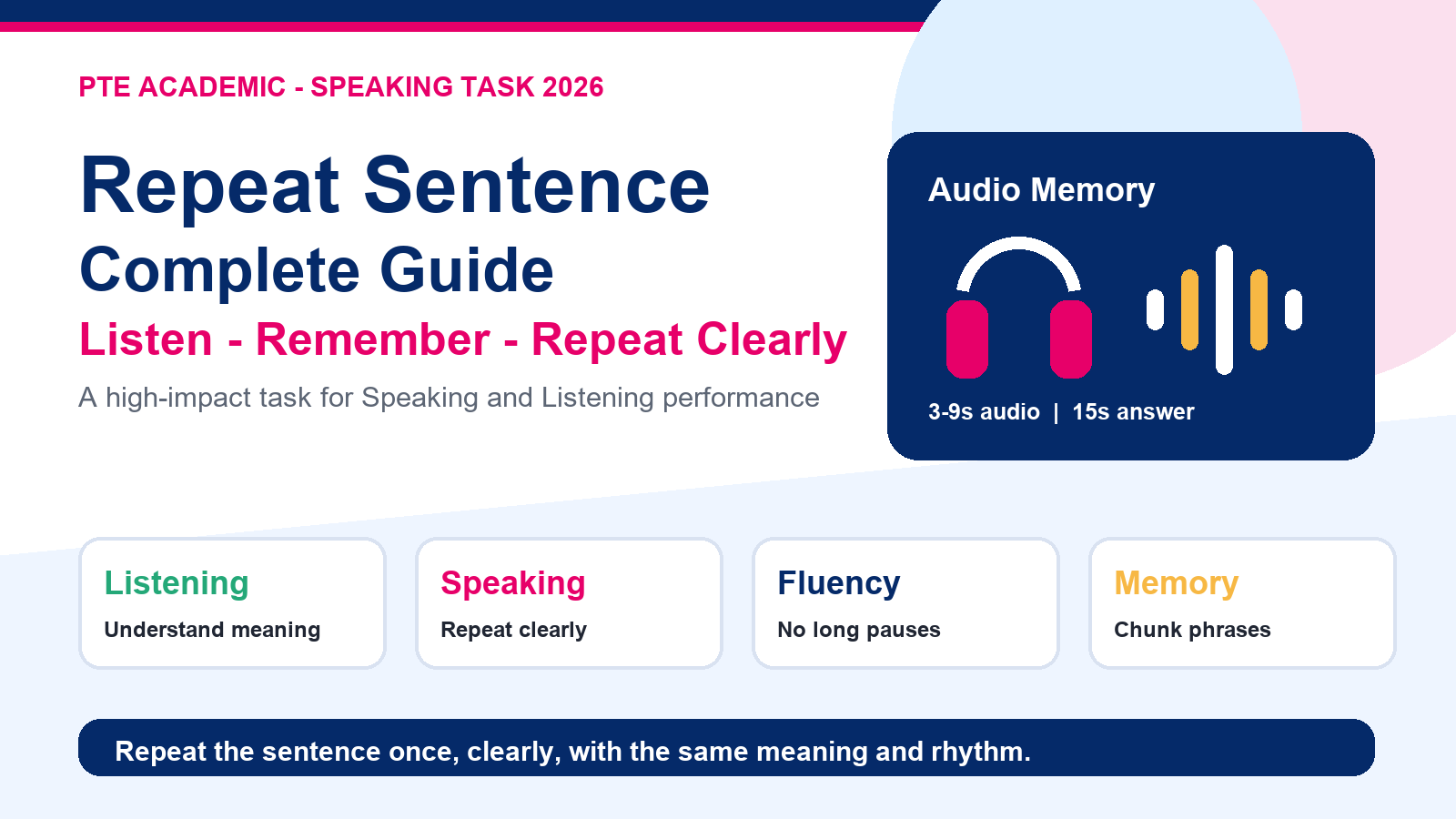
Repeat Sentence is a listen-and-speak task. You hear one sentence once, remember the meaning and word order, then repeat it clearly within the time limit.
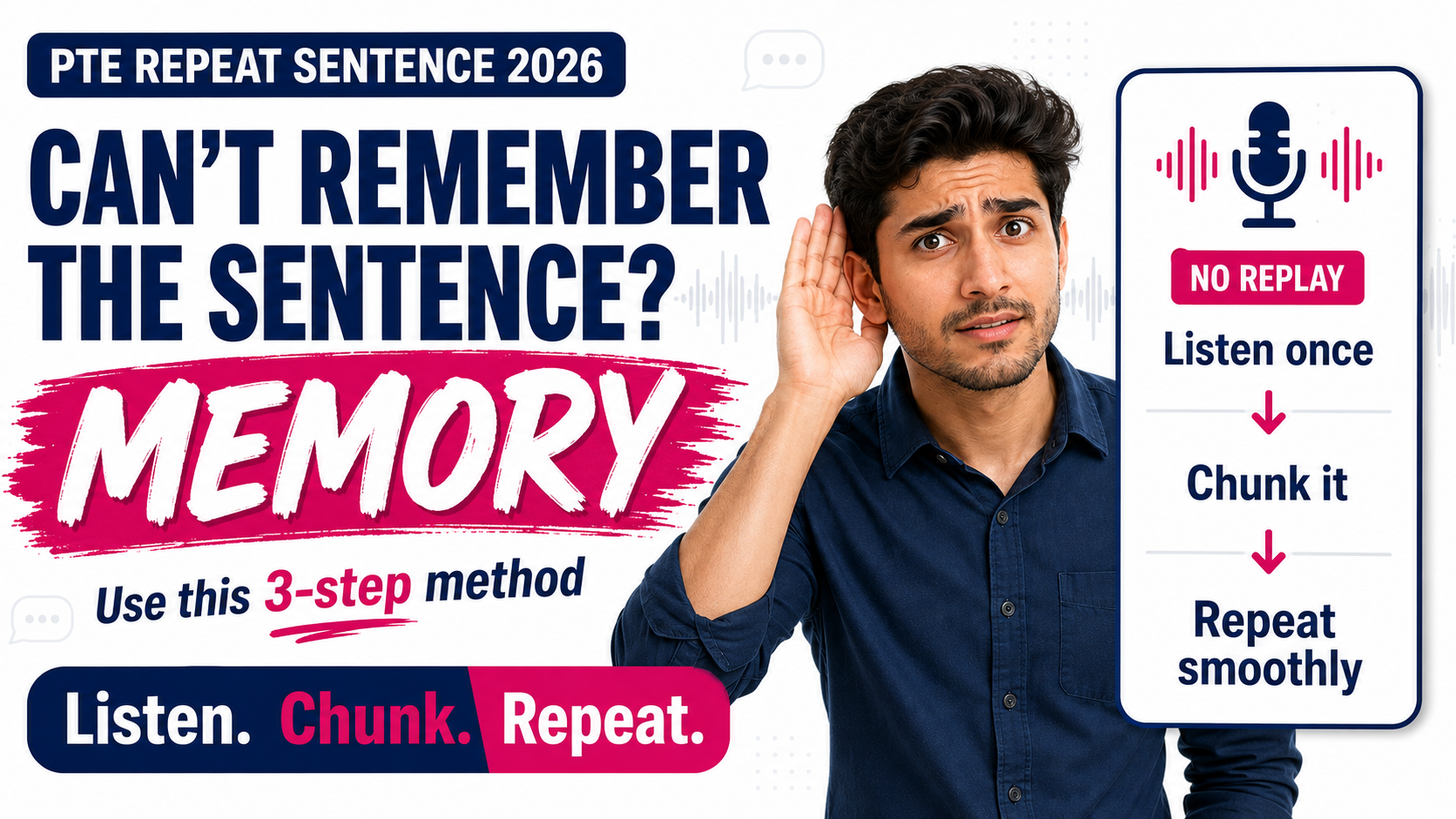
Repeat Sentence looks simple, but it can feel stressful in the real exam. You hear one sentence only once, then you must repeat it immediately. There is no replay, no second recording, and no time to write a full answer.
For 2026 preparation, the core Repeat Sentence format remains the same. The bigger PTE update from August 2025 added two new Speaking & Writing tasks, but Repeat Sentence itself is still a high-impact task for Speaking and Listening practice.
What Is Repeat Sentence?
In Repeat Sentence, you listen to a short sentence and repeat it as accurately as possible. The task checks whether you can understand spoken English, remember meaningful word groups and reproduce the sentence clearly.
| Task Detail | Repeat Sentence Format |
|---|---|
| Prompt length | 3-9 seconds |
| Time to answer | 15 seconds |
| Skills assessed | Listening and Speaking |
| Audio replay | No replay |
| Recording | One recording only |
| Scoring type | Partial credit applies |
How the Task Works on Screen
What Skills Are Assessed?
Repeat Sentence contributes to communicative scores and speaking traits at the same time. That is why it deserves regular practice.
How Repeat Sentence Is Scored
Your score is based on three main factors: content, pronunciation and oral fluency. You do not need to sound like a native speaker, but your response should be understandable and spoken at a natural pace.
| Scoring Factor | What It Means | How to Improve |
|---|---|---|
| Content | How many correct word sequences you repeat from the sentence. | Listen in chunks, not word by word. |
| Pronunciation | How clearly your sounds can be understood. | Practise word endings, stress and common difficult sounds. |
| Oral fluency | How smoothly and naturally you speak. | Keep moving forward; avoid long pauses and too many corrections. |
3 Strategies for Success
What to Do While Listening and Speaking
| Phase | What to Focus On | What to Avoid |
|---|---|---|
| While listening | Meaning, key nouns, verbs, numbers, names and phrase order. | Panicking after missing one word. |
| Before speaking | Hold the sentence idea in your mind and start immediately after the tone. | Waiting too long and losing fluency. |
| While speaking | Repeat as much as possible clearly and smoothly. | Stopping to correct every small mistake. |
Dos and Don'ts
- Speak at a natural pace.
- Repeat the sentence in meaningful chunks.
- Keep your voice clear and confident.
- Attempt the whole sentence even if you miss one word.
- Do not wait too long after the tone.
- Do not restart the whole sentence repeatedly.
- Do not speak too fast just to include more words.
- Do not freeze because one word was unclear.
How to Prepare Outside the Test
The best Repeat Sentence practice is short, focused and consistent. You need to train both memory and speaking fluency.
Key Language Skills to Build
| Skill | Why It Helps Repeat Sentence | Practice Method |
|---|---|---|
| Linking words | Words like because, although and however help you predict sentence structure. | Practise common academic sentence patterns. |
| Content words | Nouns, verbs and numbers carry most of the meaning. | Listen for key words first, then supporting words. |
| Stress and rhythm | Natural rhythm improves oral fluency and makes your answer easier to understand. | Copy the speaker's stress pattern during practice. |
Practice Checklist
- I can repeat short sentences without long pauses.
- I can remember sentence meaning before exact wording.
- I can repeat phrase groups in the same order.
- I can keep speaking even if I miss one word.
- I can speak clearly without rushing.
- I practise with recordings and review my weak points.